

Fraud continues to evolve, affecting individuals and families across the country. Older adults are often among the most targeted groups, with scammers using increasingly sophisticated tactics to gain trust, obtain personal information, and steal money.
In Florida, where many retirees and older adults call home, the impact is especially significant. Understanding how these scams work and recognizing the warning signs can help protect both financial well-being and peace of mind.
The Growing Impact of Fraud on Older Adults
According to the FBI’s 2025 Internet Crime Complaint Center (IC3) report, phishing and spoofing scams were the most frequently reported fraud schemes among seniors, generating more than 48,000 complaints and accounting for over 24% of all reports within this age group.
Investment scams resulted in the greatest financial losses among older adults, with more than $3.5 billion reported. Cryptocurrency-related schemes affected over 42,000 senior victims and led to approximately $4.3 billion in losses.
Government impersonation scams also remain a significant concern, generating more than 32,000 complaints across all age groups and nearly $798 million in reported losses. Among older adults, more than 8,600 complaints involved criminals posing as government representatives.
The consequences of fraud often extend beyond the immediate financial loss. Victims may experience:
- Loss of financial independence
- Reduced retirement savings and generational wealth
- Increased reliance on support services
- Emotional distress and loss of confidence
- Greater hesitation to engage in future financial decisions
Why Florida Residents Are Frequently Targeted
Florida consistently ranks among the states most affected by fraud and scam activity. The state’s large retiree population makes it a common target for criminals seeking to exploit trust, urgency, and financial vulnerability.
Recent reports indicate that Floridians lose more than $1 billion annually to fraud and scams. Older adults account for a significant share of these losses and often experience higher financial impacts per incident than younger victims.
While fraud can affect anyone, understanding common tactics and staying informed can significantly reduce the risk of becoming a victim.
Why Scammers Target Older Adults
Older adults are often targeted because they may have accumulated savings, retirement funds, home equity, or other financial assets over time. In some cases, social isolation can also increase the likelihood of engaging with unsolicited communications from strangers.
Scammers are skilled at creating situations that appear legitimate. They often impersonate trusted organizations, family members, government agencies, or financial institutions to gain credibility and encourage quick decisions.
Many schemes rely on pressure, urgency, or fear to prevent victims from taking the time to verify whether a request is legitimate.
The Most Common Scams Affecting Older Adults
While fraud schemes continue to evolve, several types of scams consistently result in significant losses among older adults.
Romance Scams
Scammers establish relationships through dating websites, social media platforms, or messaging apps. After building trust over time, they create reasons to request money or financial assistance.
Business Impersonation Scams
Scammers impersonate banks, service providers, delivery companies, or other well-known organizations to obtain account information or persuade victims to transfer funds.
Government Impersonation Scams
Criminals pretend to represent government agencies and use threats involving taxes, legal action, fines, or benefits to pressure victims into making immediate payments.
Grandparent Scams
Criminals pose as grandchildren or other family members, claiming to be in immediate trouble and in need of financial assistance. They may request money for medical emergencies, legal issues, or unexpected travel expenses.
Tech Support Scams
Fraudsters impersonate technology companies or support representatives and claim a device has been compromised. Victims are then persuaded to provide remote access, share sensitive information, or pay for unnecessary services.
Charity Scams
Fraudulent organizations seek donations by exploiting current events, natural disasters, or emotional causes. Requests often appear legitimate, but direct funds to criminals rather than charitable organizations.
Lottery and Prize Scams
Victims are informed they have won money or a valuable prize but must first pay taxes, processing fees, or other costs before claiming their winnings.
How These Scams Typically Work
Although fraud schemes vary, many follow a similar pattern:
- An unsolicited phone call, text message, email, or social media message is received.
- The scammer claims to represent a trusted organization or individual.
- The scammer builds credibility through conversation and familiarity.
- Pressure is applied to create urgency, fear, or excitement.
- The victim is persuaded to share information, provide account access, or send money.
Recognizing these tactics early can help prevent fraud before any financial loss occurs.
Watch for These Warning Signs
Be cautious if you encounter any of the following:
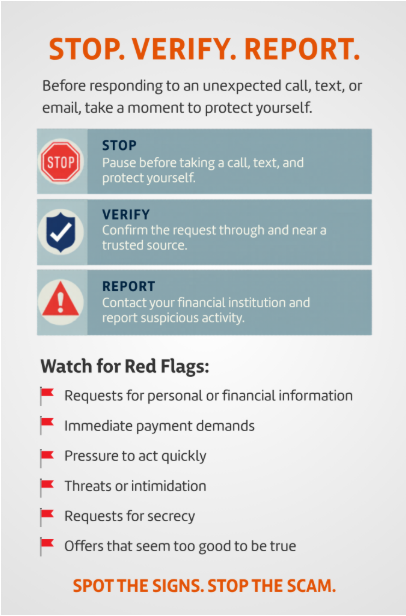
- Requests for personal, banking, or account information
- Demands for immediate payment
- Pressure to keep a situation secret
- Threats involving arrest, legal action, or financial penalties
- Requests to transfer money urgently
- Unexpected requests to click links or download applications
- Offers that seem unusually generous or too good to be true
STOP. VERIFY. REPORT.
If you receive an unexpected phone call, text message, or email, take a moment before responding.
STOP
Pause before taking action. Scammers often rely on creating a sense of urgency that discourages careful decision-making.
VERIFY
Confirm the legitimacy of the request by contacting the organization or individual through a trusted phone number, website, or known point of contact. Never rely solely on the information provided in the message you received.
REPORT
Notify your financial institution and report suspicious activity to the appropriate authorities. Reporting fraud may help prevent others from becoming victims.
A few minutes of verification can help prevent significant financial loss.
What to Do If You Suspect Fraud
If you believe you have been targeted by a scam or may have shared sensitive information:
- Contact your financial institution immediately to help secure your accounts.
- Review your account activity for unauthorized transactions.
- Change passwords and security credentials if necessary.
- Report the incident to your local law enforcement agency.
- File a report with the FBI’s Internet Crime Complaint Center at IC3.gov and provide as much information as possible.
Taking action quickly can help limit potential losses and strengthen account security.
Staying Vigilant in an Increasingly Digital World
Fraud schemes continue to become more sophisticated, but awareness remains one of the most effective forms of protection. Understanding common scams, recognizing warning signs, and taking time to verify unexpected requests can help reduce the risk of financial loss.
Whether the request comes by phone, text message, email, or social media, remember the same principle: stop, verify, and report. A cautious approach today can help protect your finances and provide greater peace of mind for the future. Visit our Security Center for more tips and information.
For more information, visit the FBA site for tips, videos, and other helpful resources.
Related posts